Building Startup Media Credibility That Lasts
Before a startup earns revenue, builds a customer base, or establishes a recognizable brand, it must first answer a more fundamental question.
Why should anyone believe in us?
For emerging companies, earning that belief is what startup media credibility is all about. Many founders assume credibility comes from landing coverage in a major publication. While earned media can certainly strengthen a company’s reputation, a headline alone rarely changes someone’s mind. Customers, investors, employees, and partners don’t evaluate startups based on a single article. They look for evidence that a business is executing through customer traction, pilot projects, technical validation, strategic partnerships, industry recognition, and other meaningful signs of progress.
But strategic communications doesn’t create business momentum. It amplifies that momentum and makes it visible to the audiences that matter most.
This is where strategic public relations creates value. It doesn’t manufacture credibility. It broadcasts the business progress that earns it. By turning meaningful milestones into stories shared through trusted third-party voices, a strategic communications program helps those achievements reach the customers, investors, partners, and other audiences that matter most.
This doesn’t happen through a single announcement or headline. It’s built through consistent storytelling over time. At Technica Communications, we often encourage our clients to “let 1,000 headlines run.” Every story reaches a different audience, reinforces a different aspect of the business, and contributes to a broader narrative about who you are, what you’re building, and where you’re going.
Today, that credibility extends beyond the people reading those stories. It also shapes how AI platforms understand, reference, and recommend your company as customers, investors, and partners increasingly rely on AI to research businesses and industries.
The goal isn’t to chase publicity. It’s to communicate progress in a way that builds lasting trust consistently.
Let 1,000 headlines run
If credibility is built through business progress, then communications should reflect that same consistency. Rather than relying on one press release to tell your story, every meaningful business milestone becomes another opportunity to reinforce who you are, what you’ve accomplished, and why your company matters.
Many startups spend months chasing one dream publication. They believe that a feature in a national business outlet will put their company on the map. Sometimes those opportunities happen. More often, credibility is built through a steady drumbeat of newsworthy stories that document meaningful progress.
A trade publication may introduce your technology to prospective customers. A local business journal may reach future employees or regional investors. An industry podcast may spark a partnership conversation. A customer case study may later be cited by an AI platform answering questions about your market.
Each story reinforces a different piece of your company’s credibility. But the key isn’t communicating more often. It’s communicating the stories that matter most to the audiences you’re trying to influence. That also means telling those stories differently depending on who you’re trying to reach. An investor may care about market opportunity and growth, while a prospective customer may want to understand how your technology solves a specific problem. A potential partner may be looking for proof that your company can execute. When communications reflect each audience’s priorities, challenges, and point of view, people are more likely to feel that your company understands what matters to them rather than simply broadcasting the same message to everyone.
That’s why we encourage clients to let 1,000 headlines run. Not because every article carries the same weight, but because every credible story adds another layer to your company’s reputation. Over time, those layers create a much stronger foundation than any single headline ever could.
Thought leadership turns expertise into trust
Letting 1,000 headlines run doesn’t mean every story has to be a press release. Some of the most valuable stories are the ideas, lessons, and perspectives that only your leadership team can share.
Startup leaders don’t just build companies. They help move industries forward. Through years of solving technical and commercial challenges, founders develop perspectives that can shape how customers, investors, policymakers, and peers think about the future. Thought leadership brings those insights into the broader conversation.
While earned media introduces your company and amplifies its credibility, thought leadership demonstrates the expertise, vision, and market perspective behind that progress. The strongest thought leadership doesn’t promote products. It helps people better understand an industry challenge, emerging technology, or changing market while demonstrating how your company thinks, not just what it sells.
That expertise shouldn’t be confined to contributed articles or conference stages. Today, thought leadership should extend across every channel where your audiences are already paying attention.
LinkedIn, in particular, is one of the most effective places for founders and executives to demonstrate expertise. They can also participate in industry conversations, reinforce media coverage, and share perspectives. Rather than functioning as a promotional feed, it can extend your broader communications strategy, especially by keeping your expertise visible between major announcements.
When company leaders consistently contribute valuable insights across earned media, owned content, speaking engagements, and platforms like LinkedIn, they become recognized as trusted experts. That credibility often creates momentum that extends well beyond any single article or interview, leading to additional media coverage, speaking invitations, customer conversations, strategic partnerships, and new business opportunities,
How to Know Your Credibility Is Growing
Earned media, thought leadership, and a consistent executive presence all serve the same purpose. They build trust. But how do you know whether that trust is translating into real business value?
The answer isn’t found in media impressions alone or the number of articles you’ve secured. One of the clearest signs that your communications are working is messaging carry-through: when the story you’ve been intentionally telling about your company starts showing up in how other people talk about you.
You might see reporters use the same language you’ve developed to describe your technology, customers repeat your value proposition back to you, or investors and partners reference the same market problem you’ve worked to establish. The more consistently your core narrative, specific language, and key sentiments carry through into those outside conversations, the stronger the indication that your messaging is resonating.
That matters because effective communications shouldn’t simply make more people aware of your company. They should shape what people understand and remember about it. Ultimately, the strongest measure of credibility is whether that understanding makes it easier for customers, investors, employees, and partners to believe in your company and take the next step. Some of the strongest indicators include:
- Qualified inbound lead increase
- People recognize the company name and have at least a sense of what work it does when they meet people in the company
- Customer inquiries following earned media
- Investor conversations after major announcements
- Speaking invitations
- Strategic partnership opportunities become easier to strike
- Organic search growth increases
- AI citations and visibility improve
- Increased website traffic
Viewed together, these indicators provide a much more meaningful picture of communications performance than media impressions alone. They indicate your efforts are driving real business outcomes, not simply generating attention.
Ultimately, startup media credibility isn’t measured by what people read. It’s measured by what they do after they read it.
The Startup Media Credibility Flywheel
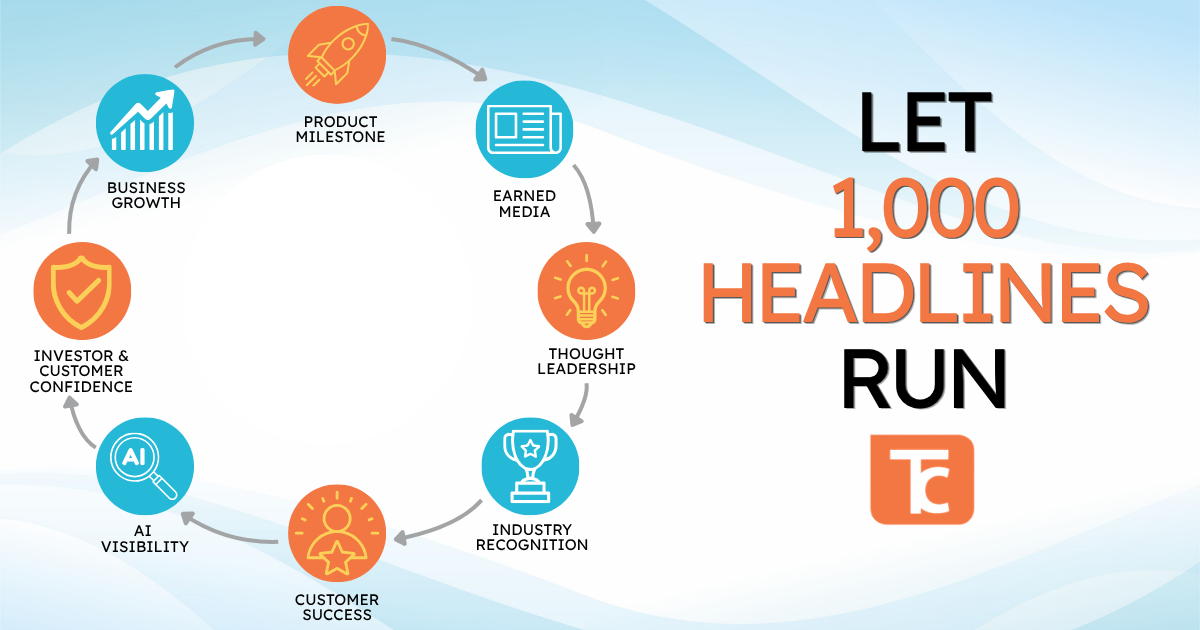
At Technica Communications, we view startup communications as a flywheel, not a series of disconnected campaigns. Every newsworthy customer win, partnership, product milestone, or industry achievement becomes an opportunity to communicate meaningful progress. Those stories build credibility, create business momentum, and generate the next set of milestones worth sharing.
Over time, each stage reinforces the next, creating a cycle of credibility that becomes increasingly difficult for competitors to replicate.
The Startup Media Credibility Flywheel works like this:
- Meaningful business milestones create legitimate reasons to tell new stories.
- Earned media provides independent, third-party validation.
- Thought leadership demonstrates C-Suite vision and expertise, as well as educating the market.
- Awards, speaking engagements, and strategic partnerships reinforce industry authority.
- Customer success stories and case studies reduce perceived risk by demonstrating real-world results.
- AI visibility grows as trusted publications, educational content, and company resources become part of the body of information AI systems reference.
- Customer, investor, and partner confidence increases through repeated exposure to credible information.
- Business growth creates the next generation of milestones, restarting the cycle.
Every announcement, article, customer success story, and thought leadership opportunity should make the next one easier.
A pilot project becomes a customer success story. A customer success story strengthens an award submission. An award creates another media opportunity. Media coverage introduces new customers, who generate new milestones worth sharing.
That’s how lasting startup media credibility is built. So stop having the New York Times-or-bust mentality and let 1000 headlines run.