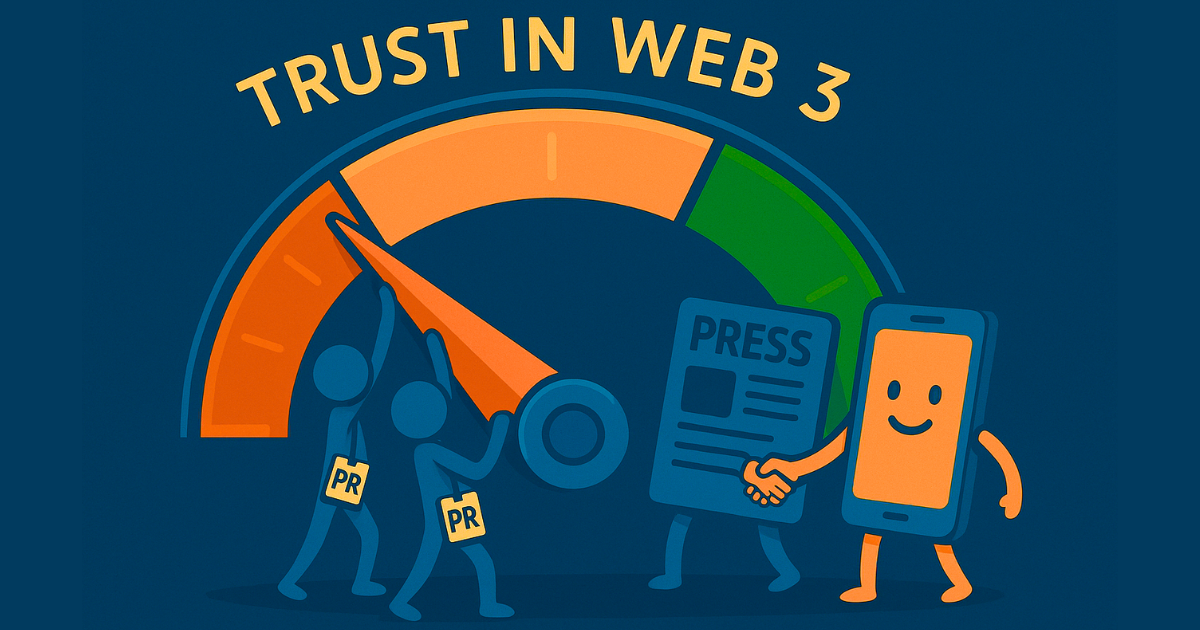
Strategic Public Relations Can Bridge Web3 Credibility Gap
Web3 companies are building extraordinary things, including new forms of digital value, decentralized systems for finance and identity, and infrastructure designed to withstand everything from state surveillance to climate disruption. However, even as technology advances, the communication surrounding it is abysmal.
Much of the sector still acts on the assumption that superior technology alone will attract attention and drive adoption. In reality, that assumption no longer holds up. While developers continue to build the next generation of decentralized internet and smart protocols, public familiarity and trust in these innovations lag noticeably.
This trust deficit has serious consequences. A recent Deloitte–Wall Street Journal report notes that although blockchain technology emerged following the 2008 financial crisis as the so-called “trust machine,” only 32% of media signals about the industry are now positive. The rest stem from concerns around crime, ethics, and insufficient governance.
Suppose blockchain is to scale into mainstream use cases across finance, logistics, clean energy, and beyond. It cannot be viewed primarily as a speculative vehicle. The industry must demonstrate a track record of transparency, regulatory alignment, and real-world problem-solving. Without strategic communications to translate complex protocols into tangible benefits and explain why those benefits matter to the general population, the credibility gap will continue to limit the industry’s long‑term impact.
That’s where thoughtful, integrated public relations (PR) can play a catalytic role.
Builders Focus on the Code, But That’s Only Half the Battle in Web3
In Web3, it’s common for teams to prioritize technical development above all else. “Devs just want to dev” after all. That makes sense, as strong code is the foundation of any blockchain project. However, this focus is often at the expense of broader visibility that could drive business goals, credibility that could attract more investors, and strategic communications that convey the message to the end user.
Startups may launch a groundbreaking protocol, but without a clear story or trusted brand, their impact can be limited to insider circles. In the absence of intentional messaging, many projects resort to quick-hit tactics, such as SEO-driven whitepapers or one-off sponsored posts, none of which foster lasting recognition or trust – let alone mainstream exposure.
The result is a disconnect with promising technologies that struggle to gain traction outside their immediate communities, not because the work isn’t strong, but because the story isn’t being told in a way people can hear or understand.
We’ve Seen this Before
The energy transition faced a similar challenge more than a decade ago. At the time, many PR firms overlooked climate and energy startups, viewing them as too niche, too technical, or too speculative to be worth the effort. However, a handful of firms (such as Technica) chose to lean in, learning the science, and navigating policy nuances. Their support helped startups translate complex innovations into narratives that broader markets could understand and buy into. That work helped build what are now some of the most recognizable brands in the industry.
A clear example of this came with Technica’s early work supporting ZeroAvia. At the time, the concept of hydrogen-electric aviation was largely misunderstood, even among energy and aviation insiders. Technica helped the company break through by grounding its media strategy in clarity and credibility. We focused on translating technical milestones into language the public, investors, and regulators could relate to, positioning ZeroAvia not just as a novel startup, but as a viable path forward in decarbonizing aviation. That clarity opened doors to mainstream coverage, industry recognition, and ultimately, broader trust.
Today, Web3 is arriving at a similar inflection point. Projects that pair technical excellence with clear, intentional communication will be the ones that move beyond hype cycles and earn long-term traction in the markets that matter.
What Strategic PR Can Do for Web3
For Web3, PR has to be more than just hype. A good strategy aligns tactics with business goals to focus on building visibility, understanding, and trust among key audiences, including enterprise buyers, journalists, investors, policymakers, and the broader public.
This begins by moving beyond token prices and short-term speculation, highlighting the real-world value of blockchain technology. It includes the problems it solves, the groups it serves, and its integration into industries such as finance, energy, and logistics. Whether enabling more equitable financial systems, advancing digital identity, or powering peer-to-peer energy markets, these stories deserve to be told on their terms, not just through price charts or roadmap teasers.
It also means simplifying complexity. Most blockchain tools aren’t intuitive to the average user. Jargon-heavy language, confusing interfaces, and technical opacity remain key barriers to adoption.
According to MarketWatch, 90% of non-crypto users cite a lack of understanding as their main reason for staying out of the space. Cointelegraph adds that blockchain must “become invisible”, delivering real value behind the scenes without requiring users to grasp the technical underpinnings. Public relations professionals help bridge that gap by translating technical topics into messaging that resonates with both technical and non-technical audiences.
Public Credibility for Web3 Founders
Equally important is elevating technical founders into credible public leaders. Being a great builder doesn’t automatically translate into being an effective spokesperson. Media training, thought leadership strategy, and positioning work are essential to help founders earn trust beyond crypto-native circles.
And in a space defined by rapid cycles, durability matters. Projects can rise and fall in a single news cycle. What lasts is consistent storytelling, clear messaging, and credibility earned over time. Strategic public PR ensures that a company’s message evolves in tandem with its growth, reinforcing its value and relevance in a changing market.
At the same time, Web3 teams are navigating a new kind of media environment that is shaped by paid placements, influencer platforms, and monetized audience access. Blending earned media with these newer formats requires careful planning and execution. Done right, a sponsored post can lead to mainstream press coverage. A smart, boosted LinkedIn post can support a keynote opportunity. Integrated PR strategies help ensure that all channels work in concert, not in conflict.
In a trust-challenged space, consistency and clarity are more than just pleasant to have; they are essential building blocks of legitimacy and ultimately, traction.
Web3 Maturity Looks Like Strategy
There’s real money and real potential in Web3. However, with growing scrutiny and skepticism, the companies that will thrive are those that present a clear story, build lasting reputations, and learn to engage beyond their technical community.
That doesn’t happen by accident. It occurs through strategy, storytelling, and the work of communications professionals who understand how to connect innovation with impact.
Web3 doesn’t just need more visibility; it also needs more transparency. It requires the right kind of visibility. And that starts with taking communications and PR as seriously as you take the code.