
Sustainable Data Center Infrastructure and the 20 Leaders Driving Its Advancement
Meet the key voices working to reshape how data centers are powered, cooled, built, and operated.
Pre-AI, data centers were near-invisible infrastructure. Post-AI, they are a political flashpoint, and for the first time, the industry must earn a social license to operate. In 2025, community opposition blocked or delayed an estimated $98 billion in data center projects, and outright cancellations more than quadrupled year over year. By early 2026, lawmakers in more than 30 states had introduced more than 300 bills on water use, ratepayer protection, and siting; Maine is on track to enact the first statewide moratorium. The catalyst is no mystery. AI’s infrastructure appetite has finally collided with the people who live next to it, threatening to drive up household power bills, draw tens of thousands of gallons of water a day in places already in short supply, and produce only modest permanent employment for the footprint it requires.
This social license to operate is the new constraint shaping every siting, design, and procurement decision in the sector. Google pulled the plug on a $1 billion Indianapolis campus after months of opposition. xAI is fighting Memphis residents over the aquifer draw. Project sponsors who used to compete on speed-to-power are now competing on whether a county will let them break ground at all.
Against that backdrop, engineers, founders, and operators are quietly redesigning the asset class, introducing modular energy systems, liquid and immersion cooling, stranded-renewable siting and energy storage, grid orchestration, behind-the-meter generation, waste-heat reuse, and water-positive cooling. They are not pitching incremental efficiency. They are building a version of digital infrastructure that balances out the relationship between the data center operators and the communities that are their neighbors.
At Technica, we believe market transitions are shaped by people as much as by technology. These are 20 leaders defining how data centers get designed, powered, and operated in an era when “we’ll just build it” is no longer a viable plan.
Our Selection Criteria
The data center market is expanding quickly, and this list could easily be longer. In building it, we did not focus solely on job titles. We looked for people working directly on technologies, systems, and infrastructure strategies to reduce data centers’ impact.
That includes leaders building modular or edge-ready facilities, developing new power electronics and storage systems, improving cooling and control software, and rethinking how data centers connect to renewable generation and the grid. In some cases, that work sits inside long-established infrastructure companies. In others, it is happening inside younger firms focused on specific technical constraints.
What these individuals share is direct relevance to the evolving data center stack. They are listed in alphabetical order by last name.
How To Use this List
Take a few minutes to explore their work. Visit their company pages, follow them on LinkedIn, and look at the technologies and infrastructure models they are helping bring to market. If you want to understand where sustainable data center technologies are heading, this is a useful group to start with.
Did we miss anyone helping shape the future of sustainable data center technologies? Let us know! Contact us here.
Heads up: Technica Founder and CEO Lisa Ann Pinkerton is attending Data Center Expo North America from May 18-19 in San Jose. If you’re interested in connecting during the event, feel free to reach out at lisaann@technica.inc.
Data Center Power, Grid, and Energy Infrastructure
As power constraints become central to data center site selection and system design, a growing set of companies is working on long-duration energy, solid-state power conversion, grid orchestration, and clean-powered campus development.
The leaders in this category are helping define how data centers secure electricity, interact with grid infrastructure, and build resilience into increasingly power-intensive operations.
 Giordano Albertazzi
CEO, Vertiv
Vertiv has become one of the default backbones for the most thermally aggressive era in data center history. Under Giordano Albertazzi’s leadership, the company is betting on making that backbone more efficient, not just bigger. And, it has the receipts to prove it. As of Q4 2025, the company has a $15B backlog and 252% year-over-year growth in orders.
In late 2024, Vertiv co-developed a 7MW reference architecture with NVIDIA for the GB200 NVL72 platform, supporting up to 132 kW per rack using hybrid liquid-and-air cooling. These are densities at which traditional air cooling fails outright, and at which liquid cooling materially outperforms on energy use per unit of compute. The same playbook is now showing up in a deployment with Compass Datacenters, a $50M liquid-cooling manufacturing expansion in Ohio, and the acquisition of Italian heat-exchanger specialist ThermoKey to deepen the supply chain.
Albertazzi joined Vertiv’s predecessor, Emerson Network Power, in 1998 and rose through plant operations, product management, services, and the presidency of the Americas before becoming CEO in early 2023. He holds a mechanical engineering degree from Politecnico di Milano and a master’s in management from Stanford. Photo credit: LinkedIn
 Brian Dow
CEO, Amperesand
Brian Dow is leading the charge at Amperesand to solve the inefficiency of transformers that step down grid power to what servers can actually use. Traditional iron-core transformers are oil-filled cylinders sitting in every data center substation. They lose 1% to 3% of the power passing through them at each stage of conversion. Across a 100-plus MW campus, those losses compound into real wasted electricity and real waste heat that the cooling system must remove.
Amperesand’s medium-voltage solid-state transformer (SST) platform is designed to do that conversion in a single, denser, more efficient step. The technology is built on silicon-carbide power electronics and spun out of a team at Nanyang Technological University in Singapore with decades of industry experience. The third-generation product targets over 98.5% conversion efficiency, a smaller footprint than conventional systems, and bidirectional power flow for easier integration with EV charging stations and renewables. The SST also supports two shifts hyperscalers are already pursuing; moving medium-voltage power closer to the rack and delivering DC power directly inside the data hall.
Amperesand has secured commercial pilots for 30 MW of system deliveries in 2026, following an oversubscribed $80M Series A closed in 2025. Before Amperesand, Dow led work at Tesla on large-scale battery systems, Supercharger V3, manufacturing changes for Model 3 battery production, and 4680 cell formation manufacturing. Photo credit: LinkedIn

Haroon Inam
CEO and Co-founder, DG Matrix
Haroon Inam and his team at DG Matrix are rethinking power conversion, one of the least visible but most important pieces of AI data center infrastructure. As hyperscale campuses grow larger and more energy-intensive, integrating grid power, batteries, onsite renewables, and backup generation is becoming increasingly complex.
DG Matrix’s product, called Interport, replaces rows of traditional power conversion equipment with a compact multi-port solid-state transformer that can manage multiple AC and DC power sources within a single system. The technology is designed to reduce the electrical room footprint, simplify the integration of on-site clean energy assets, and enable faster switching between power sources for AI-scale infrastructure.
In February 2026, DG Matrix announced a strategic partnership with Exowatt to support gigawatt-scale power systems for AI data centers, with Interport serving as the integration layer between thermal energy storage and the data hall. The company has since moved from prototype to paid pilot deployments and raised more than $100 million from investors, including ABB, Chevron Technology Ventures, and more.
Inam brings more than three decades of experience across smart grid, power electronics, aerospace, and industrial systems. Before DG Matrix, he helped raise more than $300 million for Smart Wires and has contributed to multiple successful exits while building a portfolio of more than 50 patents. Photo credit: LinkedIn
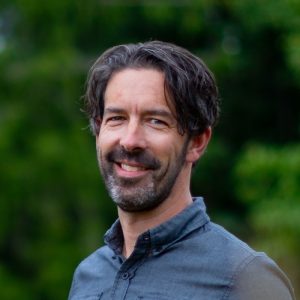 Brian Janous
Co-founder and Chief Commercial Officer, Cloverleaf Infrastructure
If anyone has earned the informal title “the person who built the modern playbook for clean-energy data centers,” it is Brian Janous. In 2024, Janous co-founded Cloverleaf Infrastructure with David Berry and Jonathan Abebe to rethink how large AI data center campuses get sited and powered from the beginning.
Cloverleaf focuses on developing data center infrastructure that enables easy access to clean energy. The company has since raised roughly $300 million and is pursuing projects in Georgia and Michigan.
During nearly 12 years at Microsoft, Janous led the execution of more than 15 GW of renewable PPAs and helped establish the Renewable Energy Buyers Alliance, now the Clean Energy Buyers Association. He also directed major deals, including Microsoft’s Wyoming wind PPA, its first European agreements in Ireland and the Netherlands, and the world’s first commercial fusion-energy purchasing agreement with Helion in 2023.
Janous has also been openly skeptical of behind-the-meter power as a standalone solution to the AI-era power crunch, a notable position at a time when many developers are racing to bypass the grid entirely. He serves on the advisory board of LineVision and holds degrees in philosophy and finance from the University of Missouri-Columbia, as well as an MBA from Webster University. Photo credit: LinkedIn

Philip Johnston
CEO and Co-founder of Starcloud
While most of the leaders on this list are working to make data centers more sustainable on Earth, Philip Johnston’s premise is that the easiest path is to leave Earth altogether with Starcloud. The pitch is straightforward in concept and audacious in execution. In orbit, solar power is largely continuous, completely eliminating the cloud cover and atmospheric interference found on Earth. Radiative cooling to space requires no water. There is no land to permit and no community to negotiate with.
The proof points are why Starcloud belongs on this list. In November 2025, Starcloud launched Starcloud-1, a 60-kilogram satellite about the size of a small refrigerator, carrying the first NVIDIA H100 GPU ever flown in space. The H100 is expected to offer 100x more powerful GPU compute than any previous space-based operation. In December 2025, Starcloud became the first company to operate a large language model on a high-powered GPU in space. In the same month, they completed the first in-orbit training of a large language model, training nanoGPT on the complete works of Shakespeare. In February 2026, Starcloud filed an FCC proposal for an eventual constellation of up to 88,000 satellites.
Starcloud already has working hardware in orbit, has trained AI models in space, raised $170 million, and secured NVIDIA as a strategic partner. If space-based data centers ever become viable, Johnston will likely be among the first to shape the category.
Prior to Starcloud, Johnson co-founded Opontia, an e-commerce company that aggregated digital brands, raising $42M and building a team of more than 100. He has also worked at McKinsey on projects with national space agencies. He holds an MPA from Harvard University, an MBA from The Wharton School, and an MA in applied mathematics from Columbia University. Photo credit: LinkedIn

Michael McNamara
Co-founder and CEO, Lancium
Michael McNamara is helping pioneer a different model for hyperscale AI infrastructure, one designed to behave more like a flexible grid asset than a constant source of electricity demand. Through Lancium, he helped develop the West Texas campus hosting Phase 1 of OpenAI’s Stargate Project, a site built around grid interconnection, behind-the-meter battery storage, and direct proximity to wind and solar resources.
Unlike conventional hyperscale campuses, Lancium’s “Clean Campus” architecture is engineered to ramp computing loads up and down depending on grid conditions, increasing consumption when renewable energy is abundant and curtailing demand during periods of grid stress. The approach is designed to better align AI infrastructure with renewable generation rather than forcing the grid to constantly adapt to fixed data center demand.
The first 200 MW phase of the Abilene campus was brought online in September 2025, with the broader site targeting 1.2 GW across eight buildings. A $600 million debt package helped finance the expansion.
Before co-founding Lancium in 2017, McNamara worked in finance and investment management, including roles at ROR Capital, Talpion Fund Management, One East Partners, and Twin Capital Management. He holds a degree in accounting and finance from Georgetown University. Photo credit: LinkedIn

Amit Narayan
CEO and Co-founder, GridCARE
Amit Narayan is working on the widening gap between when a data center is ready to operate and when the grid can actually deliver reliable electricity. In Hillsboro, Oregon, where operators are expected to wait years for new grid connections, Portland General Electric and GridCARE brought more than 80 megawatts of new data center capacity online in 2026, with another 400 megawatts targeted by 2029.
GridCARE’s Energize platform uses generative AI to scan what the company describes as quadrillions of grid operating scenarios. The platform identifies the specific hours and locations where the grid might be constrained. “Time-to-power” is the industry term for the gap between when a facility is physically ready to operate and when the grid can actually deliver reliable electricity. That gap now averages three to seven years in most U.S. markets. GridCARE targets six to twelve months.
The company’s DeFlex methodology pairs that AI analysis with flexibility solutions, primarily battery storage and distributed generation, to unlock capacity without triggering the multi-year transmission upgrades that drive most interconnection delays. PGE deployed DeFlex in Hillsboro, and National Grid announced a partnership to apply the same approach in New York in March 2026.
Narayan’s path to this problem has a coherent logic. At AutoGrid, which Schneider Electric acquired in 2022, he built AI software to orchestrate distributed energy resources across utility networks. At Berkeley Design Automation (acquired by Mentor Graphics, now part of Siemens), he was responsible for BDA’s product vision and execution. GridCARE raised $13.5 million in May 2025. Fast Company named the company to its 2026 Most Innovative Companies list in the Applied AI, Energy, and Small and Mighty categories. Photo credit: LinkedIn
Cooling, Efficiency, and Control Systems
As computing density rises, heat management could be one of the defining engineering challenges inside modern data centers. AI workloads require enormous amounts of electricity, much of which is converted into heat that can damage equipment, reduce efficiency, strain cooling systems, and significantly increase energy and water consumption.
Inefficient cooling not only raises operational costs but also increases pressure on local power grids and water resources, making thermal management a critical issue for sustainability, infrastructure resiliency, and the long-term scalability of AI and digital infrastructure.
The leaders in this group are developing new approaches to thermal management, from liquid cooling and advanced HVAC systems to AI-driven facility optimization and infrastructure management software. Their work reflects a broader shift toward cooling architectures designed specifically for high-performance computing and AI workloads, where efficient heat removal is directly tied to the amount of compute a facility can safely deliver.
 Jim Gao
Co-founder and CEO, Phaidra
The moment a GPU cluster hits peak utilization, power draw spikes and cooling systems not engineered for that load begin to fall behind. Jim Gao founded Phaidra to solve exactly this failure mode. Phaidra deploys AI agents to monitor power consumption as an early signal of an impending heat event, allowing cooling systems to respond before temperatures rise.
This differs from the reactive temperature management that governs most data center cooling today. The company targets facilities purpose-built for AI workloads rather than general enterprise computing. Those environments run hotter and less predictably than the infrastructure most cooling systems were designed to manage.
Working with Nvidia on GB200 and GB300 GPU clusters, Phaidra says its liquid-cooling agent cut thermal spike magnitude by more than 80 percent, and the supply water temperature was held within 0.5 degrees Celsius. CoreWeave is now deploying Phaidra’s AI control agents across its liquid-cooled infrastructure, beginning with Applied Digital’s 100-megawatt Polaris Forge 1 data center in Ellendale, North Dakota. The center reached full operational capacity in late 2025. Across earlier enterprise deployments, Phaidra reports cooling-energy reductions of roughly 25 percent. The company also reports that improved thermal stability frees power previously consumed by cooling for additional compute, a concept it calls stranded power recovery.
Prior to Phaidra, Gao built DeepMind’s energy team, with the mandate to apply the same class of AI that powered AlphaGo to physical energy systems. Before that, he served as a technical lead in Google’s data center operations. That combination of AI research and hands-on data center experience is precisely what Phaidra’s approach requires. Phaidra closed a Series B of more than $50 million in October 2025. Photo credit: LinkedIn

Peter Michelson
CEO, EcoDataCenter
The Kvarnsveden paper mill in Borlänge once produced newsprint for Europe, and under CEO Peter Michelson, EcoDataCenter is converting the brownfield site into a 250-MW AI campus. First power is targeted for 2027, with the capacity to scale to 600 MW. Reusing an existing industrial site, rather than breaking ground on farmland, is itself a social license argument.
EcoDataCenter’s flagship in Falun, opened in 2019, was the world’s first large-scale data center built primarily from cross-laminated timber, an engineered structural wood product known as CLT. Roughly 95 percent of the Falun structural frame is CLT, which stores biogenic carbon and reduces embodied emissions compared with concrete and steel. The site draws power from a regional mix of about 75 percent hydropower and 25 percent wind. EcoDataCenter calls this “fully renewable,” which is fair on a contractual basis. The more analyst-defensible label is low-carbon, because Nordic grid balancing still relies on system fuels at the margin.
The Borlänge build is being designed for heat reuse in collaboration with Borlänge Energi, including a system that routes surplus heat to wood pellet production for local users. Borlänge Energi expects roughly 200 long-term jobs at the campus, with around 400 workers involved during the seven-to-ten-year buildout.
Michelson took over in October 2023 after 24 years at Ericsson, most recently running its global cloud and IT services business. That background matters because EcoDataCenter’s bet is not just on green construction. It is selling colocation to AI buyers such as CoreWeave and DeepL, who evaluate operators on uptime, scalability, and procurement reliability. EcoDataCenter raised €600 million in debt in September 2025, on top of €450 million earlier that year, bringing total financing in 2023 to roughly €1.8 billion. Photo credit: LinkedIn
Launched in 2016, Octopus now serves 7.2 million customers across 18 countries and operates a £6bn portfolio of renewable energy assets across Europe. Its proprietary technology platform, Kraken, supports the Group’s expansion and is contracted to serve more than 40 million accounts globally. Octopus has attracted over $2.3 billion in funding and has been valued at around $8 billion.
A serial tech entrepreneur and angel investor, Jackson is a prominent voice in the UK on energy transition, energy costs, and innovation, linking technology platforms with large-scale clean energy deployment. Photo credit: LinkedIn

Arjun Saroya
CEO, Skycool Systems
In a modular data center prototype at UC Davis, the entire cooling system consumed less than 5 percent of total IT power while using zero water. Under Arjun Saroya’s leadership, SkyCool Systems used radiative cooling panels to achieve the result. The technology applies the same atmospheric physics as Heat Inverse’s CoolFilm, but in a different configuration.
SkyCool says its multilayer optical film reflects 97 percent of incoming sunlight while emitting heat through the mid-infrared atmospheric window, the narrow spectral band where Earth’s atmosphere is transparent and thermal radiation escapes directly into space. Water flowing through the panel drops below ambient air temperature without a compressor and without evaporation. That pre-cooled water then reduces the load on a building’s mechanical chillers.
The UC Davis installation was part of the ARPA-E-funded HoMEDUCS project, which paired SkyCool panels with cold-plate liquid cooling. The system handled up to 1.5 megawatts of IT load in a two-container footprint, reaching rack densities of 240 kilowatts per rack. The project earned ASHRAE TC 9.9’s highest efficiency classification, W+.
Saroya joined as CEO in August 2023, concurrent with the company’s $5 million seed round. Saroya spent two decades in clean energy commercialization, including a founding role as Executive Vice President of Innovation at Lime Energy, which he helped scale to $140 million in annual revenue. His background is specifically in deploying energy efficiency solutions through utility and HVAC distribution channels. The company has raised roughly $9 million, including a $250,000 investment from the Wells Fargo Innovation Incubator in September 2025. Photo credit: LinkedIn
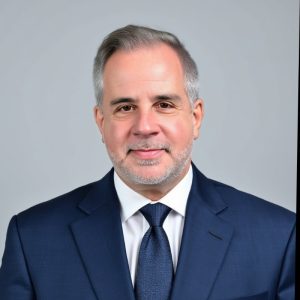
Jason Waxman
CEO, CoolIT Systems
Jason Waxman and CoolIT Systems are developing direct liquid cooling hardware designed to remove heat from increasingly power-dense AI infrastructure more efficiently than traditional air cooling. At GWDG in Göttingen, CoolIT’s direct liquid cooling technology runs across hundreds of compute nodes from multiple server vendors. GWDG says the system is central to reducing cooling power, while CoolIT says the deployment tripled compute density and lowered power usage effectiveness.
A cold plate sits on the processor, and a coolant distribution unit, or CDU, pumps and monitors the fluid loop and moves heat out of the rack. CoolIT’s product line is modular, which matters for operators trying to retrofit existing halls or standardize new AI builds across multiple server platforms.
CoolIT says its technology is deployed in hundreds of data centers, cools more than 5 million GPUs, central processing units, and accelerators, and is used in seven of the world’s ten largest supercomputers. Dell’Oro, as cited by Fierce Network, ranked it among the top three liquid cooling vendors by 2023 revenue. In March 2026, Ecolab agreed to acquire CoolIT for $4.75 billion and said CoolIT is expected to generate about $550 million in sales over the next 12 months.
CoolIT’s distinction lies in its direct-to-chip approach and its position within the original equipment manufacturer supply chain. The company works through server makers and infrastructure partners rather than asking operators to redesign everything around immersion tanks or one-off custom loops.
Waxman’s background fits that phase of the market. He spent more than 23 years at Intel, led Fluke before joining CoolIT in April 2025, and served as a founding board member of the Open Compute Project. CoolIT no longer needs evangelism alone. It needs manufacturing discipline, hardware ecosystem credibility, and enough industry fluency to turn thermal performance into repeatable deployments. Photo credit: LinkedIn

Matthew Williams
Founder and CEO, IONATE
As AI infrastructure places increasing strain on electrical systems, data centers are looking for ways to improve power quality, reduce inefficiencies, and enable existing grid infrastructure to support larger, more dynamic loads. That’s what Matthew Williams and his team at IONATE are trying to solve.
IONATE positions its Hybrid Intelligent Transformer (HIT) as a practical answer to the promise of solid-state transformers. In plain English, it combines a transformer with a smaller electronics layer and software controls. That lets one device regulate voltage, suppress harmonics, control reactive power, and capture real-time operating data. Aurora Neuralis is IONATE’s software layer that coordinates multiple HIT units across a network.
For data centers, IONATE says it can keep uninterruptible power supply systems in eco-mode, shield sensitive equipment from power quality issues, and open the path to greater grid independence. Unlike companies on this list that add generation or storage, IONATE is working on the electrical layer underneath them.
EDP has been testing HIT on live grids, and National Grid Electricity Distribution is assessing the same platform in its Low Voltage Active Power Control Transformer project for constrained low-voltage feeders. IONATE said in February 2025 that HIT and Aurora had been validated, and in 2026, partnered with JST Power Equipment to bring the platform to the U.S. market for data centers, industrial users, and grid operators.
Williams says he began working on this problem after leading upgrades of power stations and large industrial energy users in Australia. He is a mechatronic engineer, has managed systems design teams for more than a decade, and is listed as an inventor on a granted United States patent assigned to IONATE. He earned a bachelor’s degree in mechatronics, robotics, and automation engineering from The University of Queensland. Photo credit: LinkedIn
Modular, Renewable, and Compute-Integrated Infrastructure
Our final group of companies is rethinking the physical and commercial model of the data center itself. That includes modular buildouts, edge-ready facilities, renewable colocation, heat reuse, and infrastructure designed around where power is available rather than where legacy assumptions place demand.
The people in this category are working on how data centers are built, where they are located, and how they integrate with broader energy and compute systems.

John Belizaire
CEO, Soluna Holdings
Behind a 150-megawatt wind farm in West Texas, John Belizaire-led Soluna Holdings’ Project Dorothy 2 turned curtailed electricity into a 48-megawatt computing site. When Dorothy 2 reached full energization in November 2025, Soluna said its total energized capacity rose to 123 megawatts. That is Belizaire’s thesis in operating form.
Soluna builds modular data centers beside wind, solar, and hydro plants and uses flexible computing to absorb power that might otherwise be curtailed. MaestroOS is the control layer. In plain English, it is the software that helps a site ramp computing up or down to match plant output and grid conditions.
Most of Soluna’s deployed capacity still sits in Bitcoin hosting, not named artificial intelligence campuses. Project Kati 1, which began energization in February 2026, is an 83-megawatt wind-powered Bitcoin mining site. Soluna launched a cloud service in 2024 with at least 512 NVIDIA H100 graphics processing units and, in January 2026, signed a Memorandum of Understanding with Metrobloks for a first 100-plus-megawatt phase in artificial intelligence and high-performance computing at Project Kati 2.
Belizaire’s background matters because Soluna is selling orchestration as much as real estate. Before Soluna, he built and sold enterprise software companies, including FirstBest and The Theory Center. Earlier, he served as lead architect for Intel’s Digital Enterprise Group. That mix fits a company trying to turn renewable curtailment into a software-managed infrastructure product. Photo credit: LinkedIn
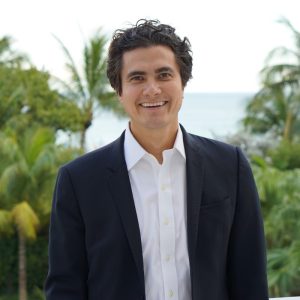
Chase Lochmiller
Co-founder, CEO and Chairman, Crusoe
Chase Lochmiller is leading Crusoe through one of the largest transitions underway in AI infrastructure, from a company originally known for flare-gas mitigation to one building hyperscale artificial intelligence campuses. By September 2025, the first phase of Crusoe’s Abilene campus was live on Oracle Cloud Infrastructure. In March 2026, Crusoe announced another 900 megawatts of infrastructure for Microsoft at the same location, bringing the campus to 2.1 gigawatts.
Crusoe’s original environmental claim was digital flare mitigation, turning gas that would have been flared at oil fields into onsite compute. In March 2025, the company agreed to sell its Bitcoin mining and flare-mitigation business to New York Digital Investment Group. The company’s center of gravity is now large artificial intelligence campuses, cloud services, and factory-style infrastructure delivery.
Crusoe is no longer mainly a methane-abatement story. It is becoming a major artificial intelligence infrastructure developer that has to prove it can source and shape power responsibly at hyperscale. Its recent moves point in that direction. Crusoe partnered with Form Energy on 12 gigawatt-hours of iron-air batteries and raised a $1.375 billion Series E round at a valuation above $10 billion.
Lochmiller’s background in quantitative research, mathematics, physics, and computer science matters less as biography than as operating style. Crusoe treats energy, capital, and computation as one optimization problem. That framing helps explain how a company born in the oil patch ended up building one of the biggest artificial intelligence campuses now under construction. Photo credit: LinkedIn
Rising Stars

Robert Alexander
CEO and Co-founder, Aluma Power
Alexander made this list as an early-stage bet because his work reflects where data center backup power is headed. Most hyperscale and colocation facilities still rely on diesel generators for backup power, creating a growing sustainability and community-relations challenge due to local emissions, noise, and permitting concerns that renewable energy purchases alone cannot offset.
AlumaPower‘s galvanic aluminum-air generator is one of the few technologies positioned to replace diesel backup power. Using recycled aluminum fuel disks that react with air and water, the system produces zero-emission electricity at the point of use, with no risk of thermal runaway.
Early pilot validation testing has demonstrated roughly 2,000 watt-hours of electrical output per kilogram of scrap aluminum, and remelting scrap consumes up to 95% less energy than producing primary aluminum.
Before AlumaPower, Alexander led R. Alexander & Co. for more than a decade, served on the advisory board of MBRP Performance Exhaust, and held senior roles at Sheer Technology, Tiercon, and Dynamic Fuel Systems, among others. He holds master’s degrees in business management and mechanical engineering from MIT and a bachelor’s in electrical engineering and computer science from Princeton. He recently appeared on the Earthlings 2.0 podcast to discuss aluminum as a circular energy carrier. Photo credit: LinkedIn
 Dr. Romy Fain
CEO and Founder, Heat Inverse
CoolFilm, Romy Fain’s core product at Heat Inverse, is a passive radiative cooling technology in adhesive film format. It works by doing two things at once. The film reflects incoming solar radiation. It also emits heat through the mid-infrared atmospheric window, a narrow spectral band of roughly 8 to 13 microns where Earth’s atmosphere is nearly transparent, and heat can radiate directly into space. The result is sub-ambient cooling, where treated surfaces can run cooler than the surrounding air temperature without electricity, refrigerant, or moving parts.
For data centers, CoolFilm targets outdoor thermal infrastructure: cooling tower housings, chiller enclosures, and building rooftops, where solar heat gain adds unnecessary load to already-strained mechanical cooling systems. Reducing absorbed heat at the building envelope means fewer kilowatt-hours are demanded by the chillers operating indoors.
Fain’s PhD in mid-infrared photonics at Cornell is not incidental here. The atmospheric window that makes passive radiative cooling viable sits precisely in the mid-infrared spectrum. Optimizing a film’s microstructure to emit exactly in that band requires deep photonic design knowledge, which Fain’s Cornell research produced. Her BS in mechanical engineering from UC Berkeley, focused on microdevices for clean energy, translates the science into manufacturable formats. She brings more than 15 years of prototyping experience to that translation.
Validated pilots exist, but not yet in data centers. Customers include Con Edison, Arizona Public Service, and NTA (since acquired by DHL), primarily in cold chain logistics, power generation equipment, and battery storage systems. The company received a $1 million NSF SBIR Phase II award in August 2022 (Award ID 2153819) and has raised roughly $1.2 million in total. No data center deployment has been publicly announced as of May 2026. Photo credit: LinkedIn

Arvin Ganesan
CEO, Fourth Power
What makes Fourth Power, led by Arvin Ganesan, relevant to a data center sustainability list is the value of its technology in unlocking one step upstream of the data hall. Hyperscalers are the largest corporate buyers of renewable PPAs worldwide. However, PPAs only deliver real decarbonization if the grids they sit on can integrate solar and wind without falling back on gas peakers. Long-duration storage is the missing piece, and the kind of storage that can hold a day’s worth of solar output or a week’s worth of wind output and dispatch it across the load profile.
At the center of Fourth Power’s approach is a high-temperature thermal energy storage system. At roughly 2,400 degrees Celsius, the graphite blocks inside the system glow white-hot, approaching half the Sun’s surface temperature. The heat, generated using renewable electricity, is transferred through a liquid-tin closed-loop system and converted back into electricity on demand using thermophotovoltaic cells. The company’s liquid-metal pumping technology also helped establish a Guinness World Record for high-temperature liquid-metal circulation.
The company has a 1 MWh demo scheduled to come online at its Bedford, Massachusetts, headquarters later this year. The unit should provide evidence that this is the type of infrastructure required for hyperscaler clean energy commitments to mean what they say they mean.
Ganesan was named CEO in 2023, joining from Apple, where he had spent five years as Head of Global Energy and Environment Policy. Before Apple, he was Vice President for Federal Policy at Advanced Energy United and held senior roles in the U.S. Environmental Protection Agency.
Fourth Power’s founder and CTO, Asegun Henry, invented the underlying high-temperature liquid-metal heat-transfer system as an MIT mechanical engineering professor, set the temperature and efficiency records the company’s pitch rests on, and serves as Fourth Power’s Founder and Chief Technologist while remaining a Full Professor at MIT. Fourth Power has raised approximately $45M to date from Munich Re Ventures, DCVC, and Bill Gates’s Breakthrough Energy Ventures. Photo credit: LinkedIn

Sorin Grama
Co-Founder and CEO, Transaera
Sorin Grama is working on one of the largest hidden energy burdens in buildings and, potentially, in future AI infrastructure. His company, Transaera, focuses on reducing the energy required to manage heat and humidity. While Transaera has not yet announced a public data center deployment, the technology is highly relevant to the growing challenge of managing heat and humidity inside power-dense facilities. Server environments in humid climates face the same cooling and moisture burdens that the company’s system was designed to reduce, making data centers a logical future market for the company.
In May 2026, Amazon signed a multi-year agreement to deploy Transaera’s cooling technology across its global building portfolio. The deal followed a six-month field trial at an Amazon logistics facility in Houston, and reports that Independent third-party analysis confirmed energy savings up to 40 percent over conventional rooftop systems.
The technology at the center of that deal is called a Dedicated Outdoor Air System, or DOAS. Conventional systems overcool incoming air to wring out moisture, an energy-intensive process. Transaera’s system instead passes incoming air through a desiccant wheel coated with Metal-Organic Frameworks (MOFs), which absorb moisture before cooling begins. As a result, the downstream cooling unit operates on dry air and uses significantly less energy. MOFs are ultra-porous materials developed at MIT by Transaera co-founder Mircea Dincă.
Grama came to Transaera from Promethean Power Systems, which he co-founded and led as CEO and CTO. Across both companies, the through-line is the same, designing cooling systems that perform under energy constraints. Grama holds a master’s in Engineering and Management from MIT and co-founded Greentown Labs, now one of the largest cleantech incubators in the United States. Photo credit: LinkedIn

Hannan Happi
CEO and Co-founder, Exowatt
Exowatt, led by Hannan Happi, is tackling the challenge of providing firm, around-the-clock clean power for AI-scale infrastructure. While hyperscalers can purchase renewable energy credits and PPAs, many data centers still rely on fossil-heavy grids when solar and wind generation falls offline. Long-duration energy storage is viewed as one of the few viable paths to truly decarbonizing the always-on computing infrastructure.
Exowatt is pursuing that challenge through thermal energy storage rather than lithium-ion batteries. Its product, called P3, combines concentrated solar collection, a thermal battery made from ceramic and clay composites, and a heat engine that converts stored heat back into electricity on demand.
Though still pre-commercial, Exowatt has raised roughly $140 million in under two years from investors including Sam Altman, Andreessen Horowitz, Felicis, MVP Ventures, and Leonardo DiCaprio.
Before Exowatt, Happi held engineering and leadership roles at General Electric, Siemens, Tesla, and Accenture, and co-founded autonomous drone company Volansi, which was later acquired by a defense firm. He trained as a mechanical engineer at the Technical University of Munich and earned an MBA from Stanford Graduate School of Business. Photo credit: LinkedIn
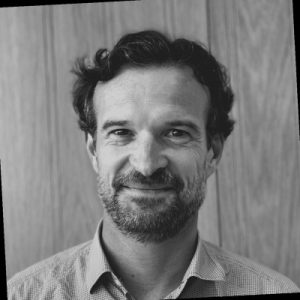 Mark Lee
CEO, Deep Green Energy
At Move Urmston in Greater Manchester, Deep Green Energy says its DG01 site will use artificial intelligence and high-performance computing to heat the public swimming pool next door. The company, led by Mark Lee, says the 400-kilowatt facility supports racks up to 150 kilowatts and reports a PUE as low as 1.07, and can save about £80,000 and 150 tonnes of carbon a year for the site it heats.
Deep Green places modular data centers next to what it calls heat partners, meaning buildings that can use waste heat instead of rejecting it. Waterless does not mean heat disappears. It means the cooling system avoids evaporative cooling towers. In earlier projects, including Exmouth, Deep Green used immersion cooling, with servers sitting in oil and heat transferred through an exchanger into pool water.
Lee took over as chief executive in March 2025 after serving as chief financial officer. The company has more than a concept, but it is still early. Deep Green’s next challenge is repeatable rollout, site finance, and local partnerships. Photo credit: LinkedIn