20 Nuclear Innovators Shaping the Next Era of Energy
Meet the people turning next-generation nuclear energy from theory into reality.
For over half a century, legacy nuclear energy has been the workhorse of electrical grids, despite its high costs, problematic waste, and potential risks if something were to go wrong. However, in the 21st century, a new generation of scientists, entrepreneurs, and engineers is transforming the nuclear industry to address historical challenges and open up new applications and opportunities.
In the wake of the AI boom and its corresponding energy demands, emerging nuclear energy solutions such as small modular reactors (SMRs) are gaining ground as potential on-site power generation solutions for AI data centers. Tech giants like Google and Amazon have both announced agreements with SMR startups to meet the massive growth and energy demands of AI, with some projects aiming for commercial operation by 2030. Meanwhile, Microsoft and Meta have each signed deals with Constellation Energy. Microsoft’s agreement will help restart Pennsylvania’s Three Mile Island, while Meta’s will keep the Clinton Clean Energy Center in DeWitt, Ill., online. Both partnerships support the rapid growth they expect in AI computing while maintaining their sustainability commitments.
At Technica, we view this shift as a human evolution driving new technology. The innovators driving this change are reimagining what nuclear energy can be: smaller, safer, faster to deploy, and designed for a world that demands both resilience and sustainability. That’s why our list celebrates the people leading this new nuclear era, from those developing small modular reactors and microreactors to pioneers in advanced fission and fusion. Some are already building commercial projects; others are racing to make fusion a reality within the decade.
What they share is a drive to make nuclear energy accessible, flexible, and inspiring again. This list isn’t about who’s been around the longest, who has the most credentials, or who has the most recognizable name; it’s about who’s shaping what’s next.
Our Selection Criteria
The nuclear energy world is vast, and while this list could easily stretch into the hundreds, we wanted to go deeper than résumés, titles, or follower counts. We looked for the people moving things forward: those designing the next generation of reactors, raising real funding to commercialize them, shaping global policy, or changing how the world talks about nuclear energy.
Some are lifelong engineers. Others are startup founders, advocates, or investors bringing new energy into a field that hasn’t always welcomed fresh voices. But all of them are shaping the direction, pace, and perception of the nuclear industry’s future.
How To Use this List
Please take a few minutes to explore their work. Follow them on LinkedIn or X, check out their companies, listen to their talks, or read their latest updates. The nuclear energy expansion is gaining steady momentum, and these are the key individuals to know if you want to understand its direction.
For those of you unfamiliar with more recent terminology related to modern nuclear energy, please reference the short glossary we have provided at the bottom of this article.
Did you have suggestions on others driving nuclear energy innovation? Let us know! Contact us here.
The Nuclear Reactor Builders

J. Clay Sell
CEO, X-energy
With a background as Deputy Secretary of Energy in the George W. Bush Administration, as a Special Assistant to the President G.H. Bush before that, and private-sector renewable energy leadership, Sell brings both technical and policy expertise to X-energy. Its mission is to commercialize high-temperature gas-cooled reactors (HTGRs) powered by TRISO fuel. Often called the most robust nuclear fuel on Earth, TRISO is made up of tiny, coated particles that can withstand extremely high temperatures, making advanced reactors safer and more efficient.
Under Sell’s leadership, X-energy secured a place in the Amazon and Energy Northwest project to provide manufacturing capacity to develop SMR equipment to support more than five gigawatts of new nuclear energy projects utilizing X-energy’s technology.
X-energy’s Xe-100 is an advanced small modular reactor that produces clean electricity and high-temperature heat for industries like chemical manufacturing and hydrogen production. The company is also working on Xe-Mobile microreactors, which are portable systems designed to deliver dependable power in the field, whether for defense, disaster response, or remote communities.
Sell’s work places X-energy squarely at the forefront of emerging nuclear innovation, bridging government policy, advanced reactor design, and commercialization to make nuclear energy scalable, safe, and adaptable to modern grid and industrial needs. Photo credit: LinkedIn

Dr. Mike Laufer
Co-Founder & CEO, Kairos Power
Dr. Mike Laufer leads one of the most technically ambitious efforts in advanced fission energy. At Kairos Power, he guides the development of the Hermes reactor, an advanced SMR that uses fluoride salt coolant and TRISO fuel to achieve higher temperatures, greater efficiency, and improved safety compared to conventional designs. Under Laufer’s leadership, Kairos also signed a power purchase agreement with Google to deploy 500 MW of advanced nuclear power, with the first deployment expected in 2030.
The Hermes demonstration reactor is supported by the U.S. Department of Energy’s Advanced Reactor Demonstration Program. The program will validate the company’s fluoride salt–cooled high-temperature reactor technology and lay the groundwork for future commercial deployment. Laufer’s vision reflects the larger shift defining the emerging nuclear industry, moving from one-of-a-kind megaprojects to modular, repeatable systems that make nuclear energy cleaner, safer, and accessible to more communities. Photo credit: LinkedIn

Chris Levesque
President & CEO, TerraPower
TerraPower was founded by Bill Gates to reinvent nuclear energy for the 21st century. Today, Chris Levesque leads the company’s effort to bring that vision to life through the commercialization of its Natrium reactor. This sodium-cooled fast reactor is paired with molten salt energy storage to provide both steady baseload and flexible peaking power, offering capabilities that conventional reactors cannot achieve. Through the U.S. Department of Energy’s Advanced Reactor Demonstration Program, Levesque is leading TerraPower’s construction of the first Natrium demonstration plant in Kemmerer, Wyoming. The project is on the site of a retiring coal facility, and seeks to demonstrate how flexible, next-generation nuclear power can work alongside renewables to deliver reliable, carbon-free energy.
Levesque’s leadership spans decades of nuclear engineering and large-scale project delivery, including senior roles at Westinghouse and AREVA. At TerraPower, he is redefining what nuclear infrastructure can look like: smaller, modular, digitally integrated, and designed to complement renewables on a decarbonized grid. Photo credit: LinkedIn
 John Hopkins
President & CEO, NuScale Power
John Hopkins leads NuScale Power, the world’s first company to receive U.S. Nuclear Regulatory Commission approval for an SMR design. The company’s reactor modules are factory-made, shipped by truck or rail, and assembled on-site. Each unit can operate on its own or as part of a larger plant, giving utilities flexibility to scale power output while reducing cost and construction risk, changing how nuclear plants are built and financed.
Under Hopkins’ leadership, the company’s VOYGR power plants are positioned to deliver flexible, right-sized nuclear energy for utilities, industrial users, and even remote applications. Each 77-megawatt module can operate independently or as part of a multi-module configuration, making NuScale’s design a cornerstone of the emerging SMR nuclear market.
The company’s first commercial project is being developed alongside the U.S. Department of Energy and Utah Associated Municipal Power Systems. Once complete, it will show how modular reactors can deliver reliable, carbon-free energy to communities across the western United States.
A veteran of the energy sector with prior leadership roles at Fluor and the Nuclear Energy Institute, Hopkins continues to be instrumental in transforming nuclear from a megaproject business into a modular manufacturing industry, with the goal of proving that nuclear power can scale like renewables. Photo credit: LinkedIn

James Walker
CEO and Board Member, NANO Nuclear Energy
James Walker is leading one of the most ambitious efforts in the new era of small-scale nuclear. At NANO Nuclear Energy, he oversees the development of the KRONOS micro modular reactor (MMR), a transportable, small-scale nuclear reactor designed to deliver reliable, carbon-free energy anywhere in the world. Under his leadership, NANO became the first microreactor company listed on NASDAQ, earning a valuation of around $700 million and recognition as a rising force in the clean energy sector.
A nuclear physicist and engineer with extensive experience across core manufacturing, reactor systems, and nuclear fuel reclamation, Walker brings both technical and operational mastery to the company’s mission. His career has spanned project management for the UK Ministry of Defense, where he led the construction of Rolls-Royce’s Nuclear Chemical Plant, and technical oversight of the UK’s reactor core manufacturing facilities.
Walker’s blend of scientific expertise and corporate leadership positions him at the forefront of microreactor innovation, bringing nuclear power down to a scalable, portable, and commercially viable size for the next generation of energy infrastructure. Photo credit: LinkedIn

Dr. Jacob DeWitte
Co-Founder & CEO, Oklo
Dr. Jacob DeWitte is one of the leading figures advancing microreactor technology; compact, next-generation nuclear systems designed for flexible, decentralized power generation. At Oklo, he and his team are developing a microreactor that can operate autonomously for a decade without refueling. Oklo’s goal is to bring clean, resilient energy to remote communities, industrial users, and data centers.
With a Ph.D. in nuclear engineering from MIT, DeWitte has dedicated his career to rethinking how nuclear energy can be built, operated, and distributed. Oklo’s fast-spectrum fission technology uses recycled fuel, offering a path toward minimizing waste while unlocking consistent baseload power. The company’s first commercial reactor is under review at Idaho National Laboratory. This milestone represents a tangible step toward small, factory-built reactors that could transform how the world accesses clean energy. Photo credit: LinkedIn

Stefano Buono
Co-Founder & CEO, newcleo
Stefano Buono is bringing European leadership to the global advanced fission renaissance through newcleo, the fast-growing nuclear innovation company he co-founded in 2021. Headquartered in the UK, Italy, and France, newcleo is working to make nuclear energy safer, cleaner, and more sustainable.
Buono and his team are pioneering lead-cooled fast reactors that dramatically reduce nuclear waste and fuel use while improving safety and scalability. By using recycled plutonium in a closed fuel cycle, the company’s technology eliminates the need for uranium mining and helps turn existing nuclear waste into a valuable energy resource..
Buono’s leadership combines scientific precision with industrial pragmatism, positioning newcleo as a model for sustainable nuclear innovation in Europe and beyond. His work demonstrates that advanced nuclear energy can be both environmentally restorative and economically competitive. Photo credit: LinkedIn

Rory O’Sullivan
CEO, Moltex Energy
Rory O’Sullivan is advancing one of the most promising next-generation reactor designs at Moltex Energy, a molten salt fast reactor (MSFR) that reuses existing spent nuclear fuel to turn waste into clean power. Under O’Sullivan’s leadership, Moltex secured government backing and international partnerships to commercialize this breakthrough technology in Canada and beyond.
With a background in mechanical and manufacturing engineering, O’Sullivan brings both technical insight and entrepreneurial vision to Moltex’s mission. His company’s Stable Salt Reactor – Wasteburner (SSR-W) design aims to simplify reactor architecture while dramatically improving fuel efficiency and waste reduction.
O’Sullivan’s approach defines the emerging nuclear movement: using innovative chemistry and reactor physics to close the fuel cycle and reduce environmental impact. Photo credit: LinkedIn

Craig Ranson
President & CEO, GE Verona Hitachi Nuclear Energy
Craig Ranson leads one of the most established companies driving advanced reactor deployment globally. Under his leadership, GE Verona Hitachi Nuclear Energy is commercializing the BWRX-300, a boiling water SMR that uses natural circulation for cooling, passive safety systems, and modular construction to lower both cost and construction time significantly. Designed to deliver carbon-free base load energy.
The first commercial BWRX-300 is in development with Ontario Power Generation (OPG) at the Darlington New Nuclear Project site in Canada. Additional projects are being explored in the United States, Poland, and Estonia.
Ranson’s career spans three decades in the nuclear industry and includes executive roles at Framatome. Drawing on his industry experience and a clear focus on making nuclear scalable,
Ranson is helping move SMRs from the prototype stage to practical, repeatable power solutions that can serve utilities and communities around the world. Photo credit: LinkedIn
 Isaiah Taylor
Founder & CEO, Valar Atomics
At just 25, Isaiah Taylor is one of the youngest and most unconventional leaders in the nuclear field. A self-taught engineer who left high school at age 16, Taylor went from coding for the Defense Department to founding Valar Atomics, a startup designing helium-cooled SMRs powered by TRISO fuel. His goal is to power aviation, shipping, and industry by leveraging nuclear energy to produce synthetic hydrocarbon fuels from hydrogen and captured CO₂.
Valar’s approach to modular reactor deployment mirrors modern manufacturing. He envisions “gigasites” of standardized reactors built in clusters to supply data centers, hydrogen hubs, and industrial facilities. With $19 million in early funding and pilot projects underway in the Philippines and Utah, Taylor is rapidly turning an idea into infrastructure. Photo credit: LinkedIn
The Nuclear Fusion Visionaries

Dr. David Kirtley
Founder & CEO, Helion Energy
Dr. David Kirtley leads one of the most closely watched companies in the race to achieve commercial fusion energy, and not only because it’s backed by OpenAI’s Sam Altman. At Helion Energy, he’s building what could become the world’s first grid-connected fusion power plant.
Helion’s approach uses magneto-inertial fusion, a hybrid technique that aims to generate power without the radioactive waste or meltdown risk of traditional fission reactors. Under Kirtley’s direction, Helion has completed six fusion prototypes, each demonstrating record-setting plasma performance.
Now, Helion is constructing Polaris, a next-generation fusion machine in Everett, Washington, designed to produce electricity and fulfill the company’s landmark power purchase agreement with Microsoft. The project aims to supply clean fusion power to Microsoft’s data centers by 2028, marking the world’s first commercial fusion energy contract and a major step toward making fusion a practical energy source.
Kirtley, an aerospace engineer by training, brings deep expertise in plasma dynamics and energy systems. His work fuses aerospace precision with breakthrough fusion design, emphasizing scalability, compactness, and speed of iteration. As fusion edges closer to viability, Kirtley stands at the center of emerging nuclear innovation, proving that what once belonged to science fiction is now an engineering reality on the horizon. Photo credit: LinkedIn
 Dr. Bob Mumgaard
Co-Founder & CEO, Commonwealth Fusion Systems
Commonwealth Fusion Systems (CFS) is one of the most advanced private fusion companies in the world. Spun out of MIT’s Plasma Science and Fusion Center, CFS is developing compact, high-field tokamak reactors using high-temperature superconducting magnets. This critical breakthrough allows for smaller, more efficient fusion systems.
Before founding CFS, Mumgaard spent seven years at MIT, where he earned both his master’s and Ph.D. in nuclear engineering while researching plasma physics and fusion reactor design. That deep academic foundation continues to shape CFS’s technical direction and its close collaboration with MIT scientists.
Under Mumgaard’s leadership, CFS has raised billions in funding, built a state-of-the-art manufacturing campus, and is constructing SPARC, its demonstration reactor slated to produce net fusion energy this decade.
Mumgaard’s vision captures the spirit of emerging nuclear: precision engineering, rapid prototyping, and bold execution toward a world powered by limitless, clean fusion energy. Photo credit: LinkedIn
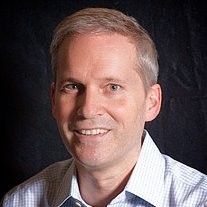
Dr. Michl Binderbauer
CEO, TAE Technologies
Dr. Michl Binderbauer has spent more than two decades pushing the boundaries of fusion physics at TAE Technologies. And that’s after spending the bulk of the 1990s developing a new stability theory for energetic large orbit particles in the magnetic structure of a high beta Field-Reversed Configuration plasma, and working with Professor Emeritus Norman Rostoker, a pioneer in fusion research on the study of a proposed advanced fuel nuclear fusion reactor for the U.S. Navy.
Under Binderbauer’s guidance, TAE has evolved from a research venture into a global leader in fusion and plasma technology, even collaborating with Google to apply machine learning to optimize reactor performance. The company’s field-reversed configuration (FRC) design represents one of the most innovative approaches to fusion, using hydrogen-boron fuel that produces no radioactive waste and emits only helium.
Beyond energy, the company has expanded into power management and particle accelerator technology, proving that fusion-driven innovation extends far beyond electricity generation.
Binderbauer’s work defines the frontier of emerging nuclear energy, that a fusion-powered future that is clean, safe, and endlessly renewable can be achieved through relentless experimentation and interdisciplinary collaboration. Photo credit: LinkedIn

Brian Berzin
Co-Founder & CEO, Thea Energy
Brian Berzin is reshaping the future of fusion with Thea Energy, a company reinventing the stellarator. The stellarator is a complex magnetic confinement device long considered promising, but a significant engineering challenge. By modernizing stellarator design with advanced computational tools and precision manufacturing, Berzin and his team aim to deliver a fusion reactor that combines the stability of steady-state operation with the scalability of modular systems.
With experience spanning venture capital, private equity, and leadership roles at General Fusion, Berzin brings a multidisciplinary approach to energy innovation. His focus on manufacturability and commercial readiness reflects a shift within fusion from scientific challenge to engineering opportunity.
Berzin’s work epitomizes the emerging nuclear paradigm, where digital design, advanced materials, and automation converge to turn fusion from theory into practice. Photo credit: LinkedIn

Chris Mowry
CEO, Type One Energy Group
Chris Mowry is leading the next wave of fusion innovation as CEO of Type One Energy. The company’s stellarator fusion design is known for its ability to operate continuously and safely without the same constraints as other systems. With a long career in advanced energy and technology commercialization that includes roles as the CEO of General Fusion, President of B&W Nuclear Energy, and General Manager of GE Hydro, Mowry is guiding the company’s mission to turn fusion from scientific theory into a reliable global energy solution.
Type One’s early vision was shaped by founding CEO Randall Volberg, who helped establish the company’s collaborative foundation. Volberg appeared on Earthlings 2.0, where he explained the differences between stellarator and tokamak reactor designs and detailed what still needs to happen before fusion can power the world.
Building on that foundation, Mowry is now steering Type One from concept to construction and turning the promise of fusion into practical, commercial energy. His leadership reflects the momentum driving today’s emerging nuclear sector, where experience, collaboration, and vision are bringing fusion closer to reality. Photo credit: LinkedIn
The System Reimaginers

Kirsty Gogan
Managing Partner, LucidCatalyst & Co-Founder, TerraPraxis
As co-founder of TerraPraxis, Kirsty Gogan is helping reimagine how the world deploys nuclear energy. Through TerraPraxis’s Beautiful Nuclear initiative, she and her team are developing strategies to repower retiring coal plants with advanced reactors. By using existing sites, grid connections, and local workforces, they aim to deliver zero-carbon energy faster and more affordably. The project has drawn international attention, including at COP28, where TerraPraxis partnered with the U.S. Department of Energy and Microsoft to showcase how coal-to-nuclear repowering can accelerate decarbonization at scale.
Gogan also serves as managing partner at LucidCatalyst, where she advises governments, investors, and energy companies on advancing next-generation nuclear projects. Her research has guided some of the most influential studies in the field, including the Energy Technologies Institute Nuclear Cost Drivers Study. Her analysis has also informed the International Energy Agency (IEA), International Atomic Energy Agency (IAEA), and Clean Energy Ministerial on nuclear’s role in achieving net-zero systems.
Through both TerraPraxis and LucidCatalyst, Gogan is bridging the gap between nuclear innovation and deployment. Her work turns big ideas into actionable plans, helping ensure that advanced nuclear technology becomes not only viable but essential to a clean energy future. Photo credit: LinkedIn

Leslie Dewan
Founder and CEO, Neutronic Designs
Leslie Dewan has long been one of the most recognizable innovators in advanced nuclear engineering. At Neutronic Designs, she’s building the supply chain needed to scale advanced reactor technologies across the world, with the goal of laying the groundwork for a new nuclear manufacturing ecosystem.
A MIT-trained nuclear engineer and former CEO of Transatomic Power, Dewan’s career is focused on making reactors safer and more efficient, while reducing long-lived waste. She’s a National Geographic Explorer, MIT Technology Review Innovator Under 35, and World Economic Forum Young Global Leader.
Her work with the National Academy of Engineering and multiple federal task forces on advanced reactor commercialization has positioned her at the intersection of science, policy, and industry. Photo credit: LinkedIn

Jonathan Webb
Co-Founder & CEO, The Nuclear Company
Jonathan Webb is a builder of big ideas and even bigger infrastructure. After founding AppHarvest to revolutionize sustainable food production, he turned his focus to modern nuclear construction. He launched The Nuclear Company to meet the rising electricity demand of the AI era, electrified manufacturing, and data-driven economies.
Rather than developing new reactor physics, Webb’s innovation lies in deployment strategy: scaling nuclear construction as an infrastructure enterprise. By partnering with proven reactor designers and heavy construction firms, The Nuclear Company is working to replicate the success of recent nuclear builds and expand the U.S. fleet rapidly.
Webb’s approach represents a crucial facet of emerging nuclear: the industrialization of deployment. In a field often constrained by timelines and regulation, he’s championing a model that makes building new nuclear power a repeatable, financeable process, capable of meeting 21st-century energy demand at scale. Photo credit: The Nuclear Company
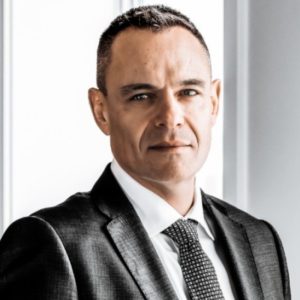
Eric Chassard
President & CEO, Bruce Power
Eric Chassard leads Canada’s largest nuclear power producer and one of the few utilities actively preparing for a new generation of nuclear technology. During his tenure at Bruce Power, the company expanded beyond plant operations to explore the feasibility of small modular reactors (SMRs) and next-generation deployment models that could bolster grid reliability while cutting emissions.
Previously serving as Bruce Power’s Executive Vice President of Projects and Engineering, Chassard successfully delivered the company’s multi-billion-dollar Life-Extension Program, one of Canada’s largest clean energy infrastructure projects. The project focused on refurbishing six reactors at the Bruce Nuclear Generating Station, the world’s largest operating nuclear facility, extending its life by more than 30 years and securing a major source of carbon-free electricity for Ontario.
Chassard previously held senior leadership roles at AREVA, where he managed major engineering portfolios, and at Menter Newydd, a joint venture overseeing nuclear new-build projects in the UK. Chassard’s work represents the evolution of legacy nuclear into emerging nuclear, where established operators adopt modular technologies, digital tools, and flexible reactors to meet a new era of clean-energy demand. Photo credit: LinkedIn
Honorable Mention: The Cultural Catalyst

Isabelle Boemeke (“Isodope”)
Nuclear Advocate & Social Media Influencer
Isabelle Boemeke, better known online as “Isodope,” is one of the most recognizable cultural voices in the modern nuclear movement. Through her futuristic aesthetic and humor-driven education style, she is reframing nuclear energy as not just safe and clean, but cool.
Motivated by witnessing deforestation and climate impacts in her native Brazil, Boemeke turned to social media to champion nuclear power as a cornerstone of the climate solution. Her work blends science communication, pop culture, and digital activism to reach audiences far beyond traditional energy circles.
By normalizing nuclear energy in the public imagination, Boemeke represents the cultural frontier of emerging nuclear energy, one that bridges the gap between advanced technology and public understanding, and inspires a new generation to see the atom as a force for good. Photo credit: Isodope
Did we miss an influencer? Let us know! Contact us here.
Nuclear Glossary
- ADVANCED NUCLEAR (ADVANCED REACTOR) – A new class of reactor designs that improve on traditional light-water reactors with features like higher operating temperatures, passive safety, modular construction, and alternative coolants or fuels.
- CAPACITY FACTOR – The percentage of time a plant generates power at its maximum output over a period. Nuclear plants typically have high capacity factors, making them reliable providers of carbon-free electricity.
- FAST REACTOR – A fission reactor that runs on fast neutrons instead of thermalized ones. Fast reactors can use recycled fuel and help reduce long-lived nuclear waste by “burning” transuranics.
- FIELD-REVERSED CONFIGURATION (FRC) – A compact fusion plasma configuration with a self-contained magnetic field.
- FLUORIDE-SALT-COOLED HIGH-TEMPERATURE REACTOR (FHR) – An advanced fission design that combines TRISO fuel with molten fluoride salt coolant. The salt operates at high temperature and low pressure, enabling efficient heat delivery and strong inherent safety.
- HIGH-TEMPERATURE GAS-COOLED REACTOR (HTGR) – An advanced fission reactor that uses helium as coolant and often TRISO fuel. It can deliver high-temperature heat for industry and hydrogen production while enhancing safety through low-pressure operation.
- HIGH-TEMPERATURE SUPERCONDUCTING (HTS) MAGNETS – Superconducting magnets that operate at higher temperatures than earlier generations, enabling smaller, higher-field fusion devices.
- LEAD-COOLED FAST REACTOR (LFR) – A fast reactor that uses liquid lead or lead-bismuth as coolant.
- MAGNETIC MIRROR FUSION – A type of fusion technology that confines superheated plasma within a straight, cylindrical chamber using strong magnetic fields at each end, known as “mirrors.” The plasma particles bounce back and forth between these magnetic fields, staying contained long enough to sustain fusion reactions.
- MAGNETO-INERTIAL FUSION – A hybrid fusion approach that magnetizes plasma and then compresses it rapidly to achieve fusion conditions.
- MICROREACTOR – A very small nuclear fission reactor (typically 1–20 MW) designed for factory fabrication and rapid deployment. Microreactors can provide resilient, off-grid power for remote communities, industrial sites, and defense applications.
- MOLTEN SALT REACTOR (MSR) – A reactor that uses molten salt as coolant, and in some designs as the fuel carrier. MSRs can operate at high temperatures and low pressures, improving efficiency and potentially reducing complexity.
- NUCLEAR FISSION – Nuclear energy can be produced through fission, a reaction in which the nucleus of an atom splits into two or more smaller nuclei while releasing energy. Fission is used to produce most of the global nuclear energy and generates nuclear waste.
- NUCLEAR FUSION – Nuclear energy can be produced through fusion, in which nuclei fuse together. Fusion is in a developmental phase.
- NUCLEAR POWER PLANT – Most commonly, these plants produce electricity by heating up water through nuclear reactions to produce steam that spins a generator. As of 2023, nuclear reactors generate about 20% of all the electricity used in the United States.
- SMALL MODULAR REACTOR (SMR) – Advanced nuclear reactors are physically smaller than traditional fission reactors, and approximately one-third of the generating capacity. These systems are considered modular, as they and their components can be assembled in a factory and transported as a unit for installation.
- SODIUM-COOLED FAST REACTOR (SFR) – A subset of fast reactors that uses liquid sodium as coolant.
- STELLARATOR – A fusion device that also confines plasma with magnetic fields, but uses a twisted, spiral-shaped chamber to maintain stability without the need for electric currents inside the plasma.
- TOKAMAK – A torus, or donut-shaped, fusion device that uses powerful magnetic fields to confine plasma in a circular path. It is the most widely used fusion design.
- TRISO FUEL – Short for tristructural isotropic fuel, TRISO consists of tiny uranium fuel particles encased in layers of ceramic and carbon materials. Each particle acts as its own containment system, able to withstand very high temperatures without melting or releasing radiation.